Guides · MLB
Betting Units and Bankroll Management, Explained
By Everett Kline — A former actuary who bets like one. Everett only trusts angles that survive a sample size, and he will happily tell you your favorite trend is noise. He tracks his systems in public and posts the record, win or lose.
A unit is a fixed slice of your bankroll, usually 1 to 2 percent, and it is the only honest way to talk about betting results. Dollars measure how much money you started with. Units measure whether you can actually pick winners. When someone tells me they are up 4,000 dollars, I have learned nothing. Tell me you are up 12 units on 300 bets and now we are having a conversation with information in it.
Start by defining the bankroll itself: money set aside for betting that you can lose without changing your life. Not rent, not the emergency fund. If losing it would hurt beyond the annoyance, the number is too big. Then set your unit at 1 to 2 percent of that figure. A 2,000 dollar bankroll at 1 percent bets 20 dollars a game. Yes, it feels small. It is supposed to. The size is doing a job, and the job is survival.
Here is the math the unit is protecting you from. Break-even at standard -110 juice is 52.4 percent, and a genuinely strong long-term bettor wins 55 to 57 percent. Even at 55 percent, losing streaks are not a risk, they are a schedule. Over a full season of daily betting, a run of seven, eight, even ten straight losses is close to inevitable somewhere along the way. At 1 percent stakes, a ten-bet losing streak costs a tenth of your roll and you keep playing. At 10 percent stakes, the same streak, the one the math promises you, ends the experiment entirely. Trends lie, distributions don't.
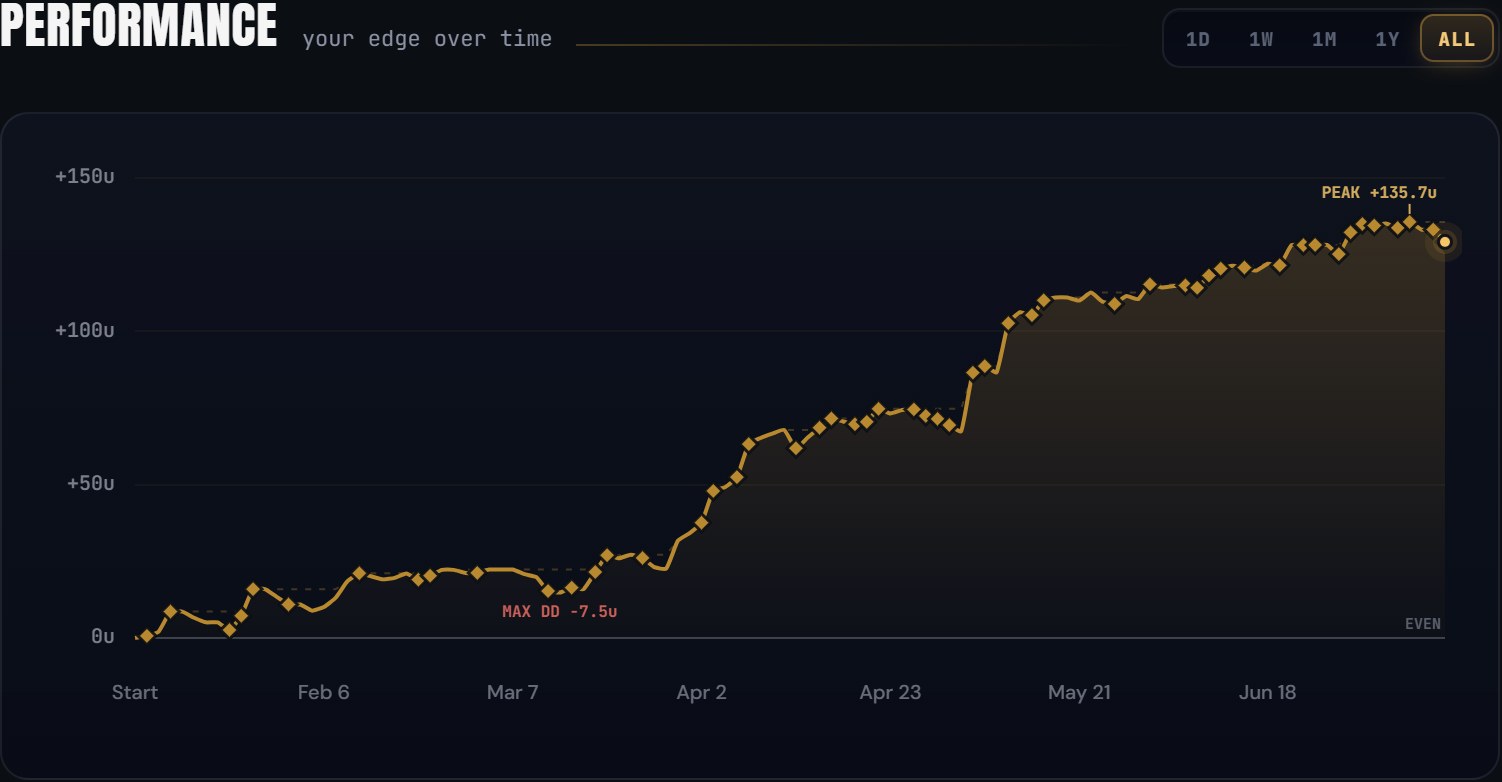
Flat betting, meaning the same one unit on essentially everything, is what I recommend and mostly what I practice. The moment you start sizing bets by feel, your confidence becomes the variable, and confidence is precisely the thing a losing streak corrupts first. If you must vary, cap the range at one to two units and reserve the top end for genuine, argued edges, not for chasing last night back.
Which brings up the two classic ways people ruin sound staking. Chasing: doubling after losses to get even, which turns a routine losing streak into a terminal one. And the hot-hand ramp: tripling stakes after a good week, which ensures your biggest bets cluster right after the run that was partly luck. Both are the same error wearing different jerseys: letting recent results, rather than bankroll percentage, set the stake.
Expectations, stated plainly: a 3 to 5 percent return on total money wagered is a strong year. Bet 500 units across a season and plus 15 to 25 units is excellent work. Anyone promising 20 percent returns has not shown you a sample size, and the sample size is the whole argument.
Finally, none of this works without a ledger you cannot argue with. Track every bet, in units, where selective memory cannot edit the record. SharpAI's bet tracking is free and does the bookkeeping automatically: record, net units, the streaks you would rather forget. The record is the argument. Make yours worth reading.