Guides · MLB
What Is Closing Line Value (CLV) in Sports Betting?
By Everett Kline — A former actuary who bets like one. Everett only trusts angles that survive a sample size, and he will happily tell you your favorite trend is noise. He tracks his systems in public and posts the record, win or lose.
Closing line value is the difference between the price you bet and the price the market closed at. Beat the close consistently and you are almost certainly a long-term winner. Lose to it consistently and no hot month will save you. That is a strong claim, so let me earn it.
The closing line is the market's final answer, set after every injury report, lineup card, weather update, and, most importantly, every dollar of informed money has pushed the number to where it stands at first pitch. It is not a perfect probability, but it is the best public estimate that exists for that game. Betting is not really you against the book; it is your number at 10 a.m. against the market's number at 7 p.m.
The measurement is simple. Say you take a team at +150 in the morning, an implied 40 percent. By first pitch the price has moved to +120, an implied 45.5 percent. The market spent the day agreeing with you, and you hold a 40 percent price on what the market now calls a 45.5 percent event. That gap is closing line value. It cashes nothing tonight, and it is still the most important thing that happened to your ticket.
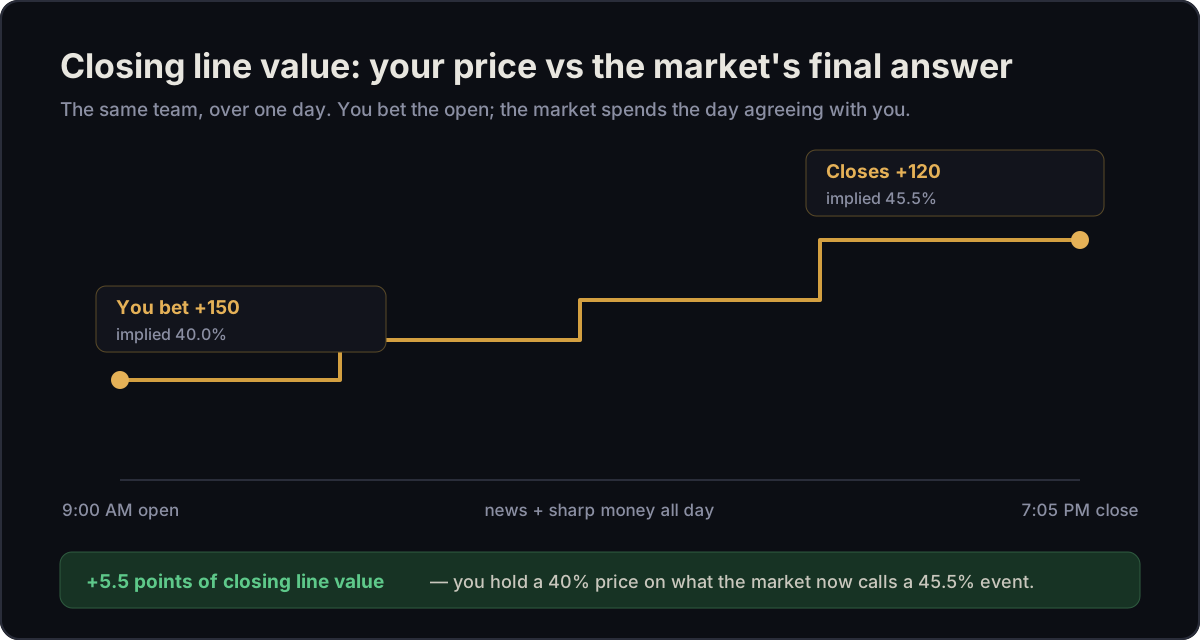
Why trust CLV over your actual record? Sample size, as always. Win-loss records over a month are mostly noise: a coin-flip bettor books winning months at a healthy clip, and a genuinely good bettor books losing ones. CLV strips out whether the ball bounced your way and asks only whether you repeatedly bought for less than the market's final appraisal. Over hundreds of bets, the group that beats the close and the group that profits are, to a first approximation, the same group. Show me the sample size, then show me the CLV.
Earning it is unglamorous. Bet early, when numbers are one busy oddsmaker's opening guess rather than a full day of market consensus. Shop several books, because taking -105 where the market settles at -110 is closing line value purchased with nothing but effort. React to real news, a scratched starter, a lineup shuffle, faster than the number moves. None of this requires genius; it requires showing up before the crowd and comparing prices while you do it. A live multi-book odds screen, like SharpAI's free one, is the basic tool of the job.
Two honest caveats. In softer markets, player props especially, closing lines are less efficient, so CLV there is a fuzzier signal, still useful, less absolute. And a single bet's CLV means nothing; this is a portfolio statistic. Judge it in aggregate over months.
If you track one thing beyond your net units, track whether you beat the close. It is the fastest available answer to the only question that matters: are you actually sharp, or just running warm? Trends lie, distributions don't.