Guides · MLB
How to Read MLB Betting Odds: Moneyline, Run Line and Totals
By Marisol Vega — Spent a decade grading tickets before she wrote a word about them. Marisol follows the money: line moves, steam, and where the sharp side actually landed. She writes the daily card the way a bettor reads it.
Every price on a betting board is a probability wearing a costume. Learn to undress it and the whole market gets easier to read. This guide covers the three core MLB markets, the math behind American odds, and the one number the book never advertises: its cut.
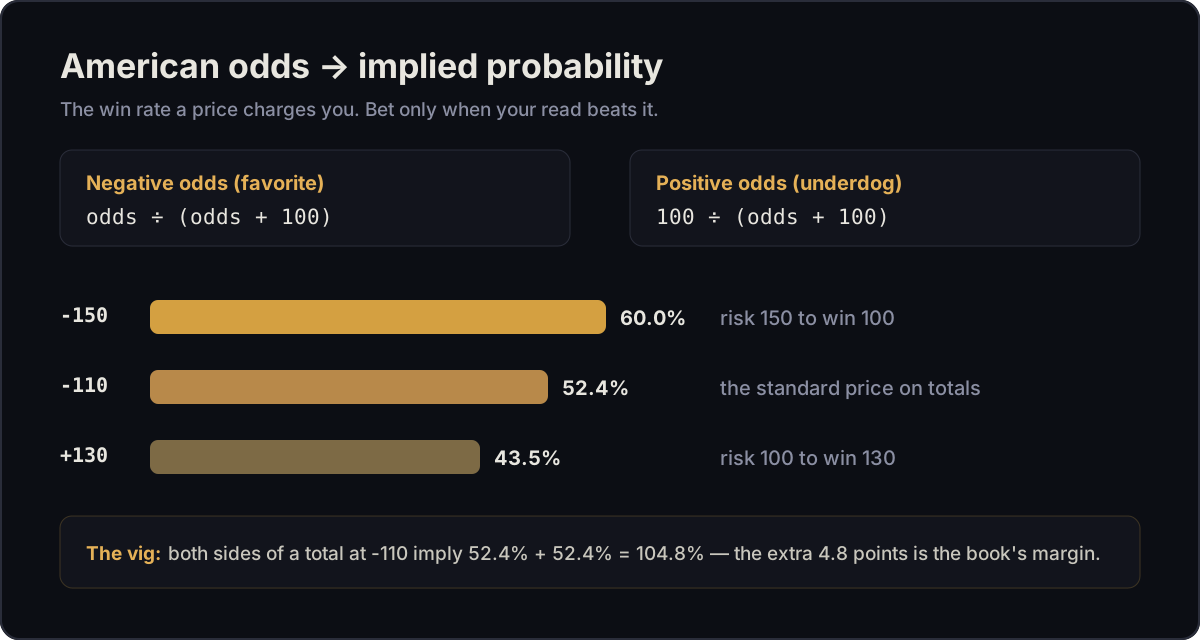
Start with American odds. A minus number marks the favorite and tells you what you must risk to win 100. At -150, you risk 150 to win 100. A plus number marks the underdog and tells you what you win on a 100 risk. At +130, you risk 100 to win 130. That is the entire notation. Everything else is arithmetic.
The arithmetic that matters is implied probability, the win rate the price is charging you for. For a minus price, divide the number by itself plus 100: -150 implies 150 divided by 250, which is 60 percent. For a plus price, divide 100 by the number plus 100: +130 implies 100 divided by 230, about 43.5 percent. If your read on the game says a team wins more often than its price implies, that price is a bet. If not, it is a pass, no matter how much you like the team.
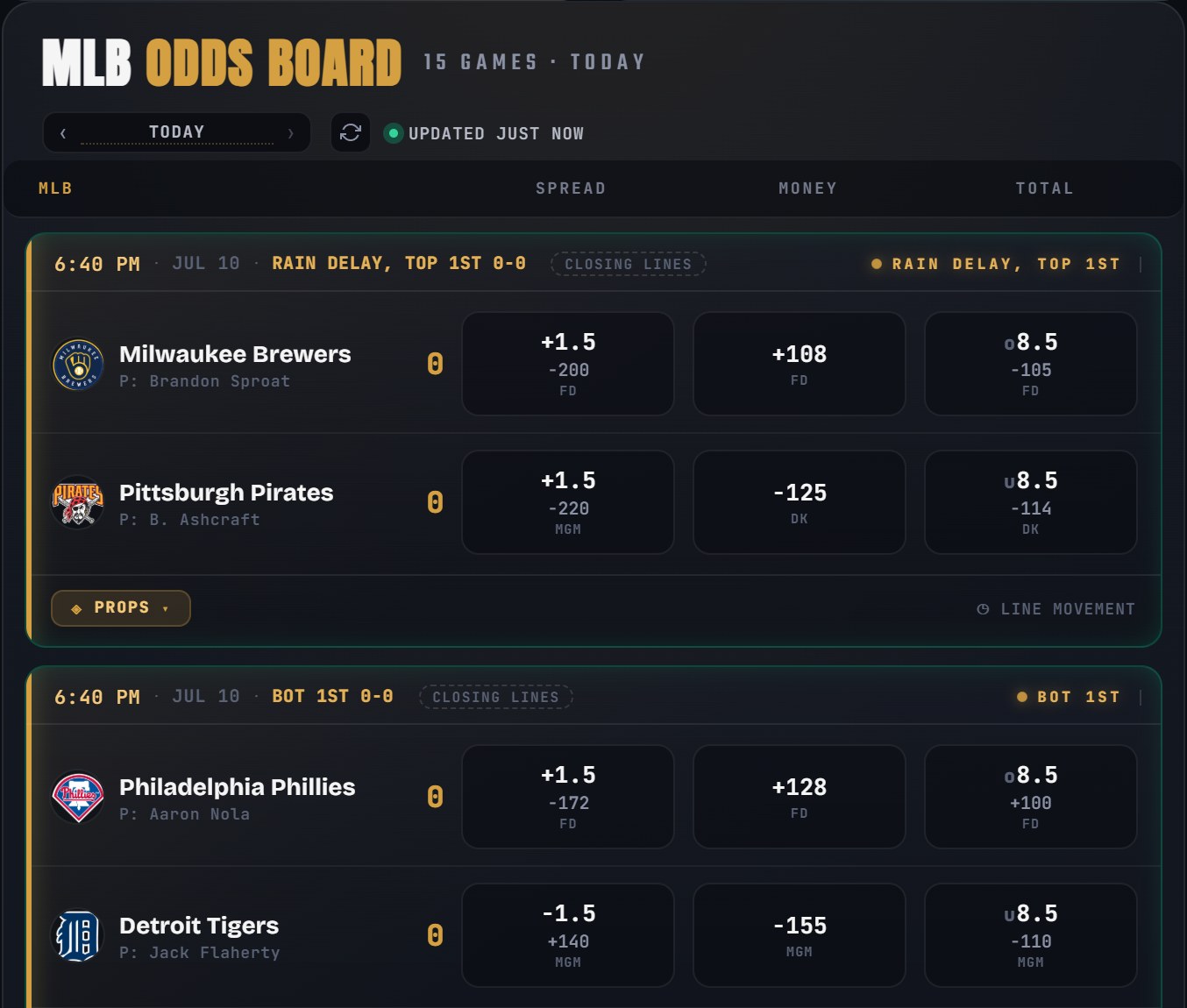
Now the moneyline. It is the purest MLB market: pick the winner, done. Because baseball favorites are usually modest, MLB moneylines mostly live between about -250 and +200, and the sport plays more like a coin flip with a lean than football does. That makes price discipline everything. Laying -180 on a team you would only back at -140 is how winning handicappers post losing seasons.
The run line is baseball's point spread, almost always 1.5 runs. The favorite at -1.5 must win by two or more; the underdog at +1.5 can lose by one and still cash. Because a large share of baseball games land within one run, that 1.5 carries real weight, and the prices bend around it: a solid moneyline favorite at -1.5 often pays plus money. There is a full guide to run lines on this site if you want the deeper cut.
Totals are the over and under on combined runs, typically hung between 7 and 10.5 with juice near -110 on each side. At -110 you risk 110 to win 100, an implied 52.4 percent. Notice what happens when both sides sit at -110: the two implied probabilities add to 104.8 percent. That extra 4.8 points is the vig, the book's margin, and it is why breaking even requires 52.4 percent winners, not 50.
Two habits separate people who read odds from people who just look at them. First, shop. The same game is priced differently across books, and the difference between -105 and -115 compounds over a season the way fees compound in a brokerage account. A live odds screen that shows several books side by side, like the free one on SharpAI, exists precisely for this. Second, respect the close. The price at first pitch reflects everything the market learned all day. If your bets consistently beat the closing number, you are doing something right. The number tells on itself.