Guides · MLB
How Do Parlays Work? Parlay Betting, Explained
By Theo Marchetti — Theo works the long board: futures, division prices, award markets, and anything that settles months from now. He thinks in probabilities and hold percentages, and he is happiest holding a ticket nobody else wanted in April.
A parlay chains two or more bets into one ticket that pays only if every leg wins. One miss, even in a five-leg ticket where four legs cash, and the whole position settles at zero. In exchange, the payout multiplies. The multiplication is real. So is the compounding of the house's margin, and the second part is the one the advertising leaves out.
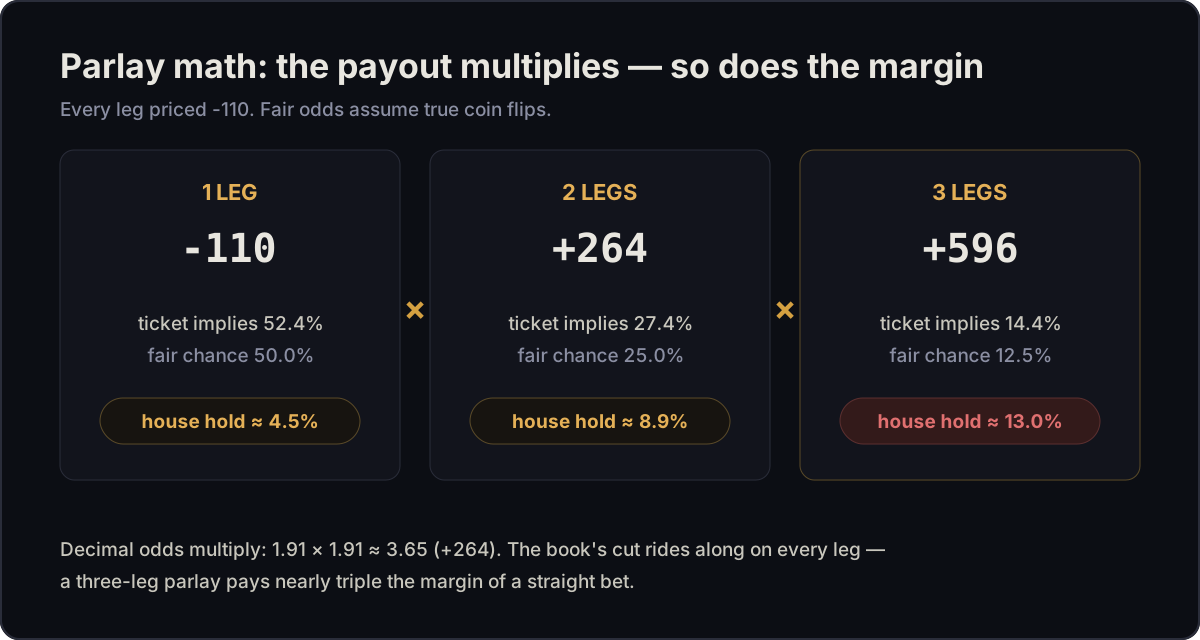
The mechanics first. To combine legs, convert each price to decimal odds and multiply. A standard -110 line is 1.91 in decimal. Two -110 legs: 1.91 times 1.91, about 3.65, or roughly +264 in American terms. Three legs at -110 lands near +596. The book quotes this automatically; the arithmetic is just the legs multiplied together.
Now price it against the implied probability, because that is where the product reveals its cost. Each -110 leg carries a 52.4 percent implied probability on what is, priced fairly, a 50 percent proposition. That 2.4-point overcharge is the vig, and a parlay does not pay it once. It pays it on every leg, multiplied. Two legs: fair odds on two coin flips are 25 percent, but the parlay price implies 27.4 percent. Three legs: fair is 12.5 percent, the ticket implies 14.4. The margin against you compounds exactly the way the payout does, which is why parlays sit among the highest-hold products a sportsbook offers. The long board rewards patience; the parlay board rewards the book.
Same-game parlays deserve their own caution. Chaining a pitcher's strikeout over to his team's moneyline feels clever because the legs are correlated: if one hits, the other probably does too. The books know. SGP pricing engines reprice correlated legs together, paying you less than the independent multiplication would, and that haircut is largely invisible on the ticket. You are rarely getting the correlation free; you are usually paying for the feeling of it.
Is there a defensible parlay? A few, used sparingly. Small-stakes entertainment tickets, sized like lottery tickets and graded as entertainment, are honest fun; a quarter unit that makes nine innings interesting is a fair trade if the ledger calls it what it is. Occasionally a bettor with genuine edges on two independent games can justify combining them, accepting compounded variance in exchange for compounded edge. That is a position for someone who already beats the market on singles, and it should be sized like the volatile instrument it is. Always know your hedge: with one leg left and real money live, the ticket has become a position you can trade out of, and sometimes locking a profit is the grown-up move.
My honest rule: bet singles to make money, parlay small to have fun, and never confuse the two accounts. Track your parlays separately, in units, and let the record speak. SharpAI's free bet tracking grades parlays leg by leg, so the ledger, not the highlight reel, tells you what the product is really returning. Price it against the implied probability, every time.