Guides · MLB
How to Bet MLB Home Run Props
By Cal Draper — Cal lives in the prop markets: hits, strikeouts, homers, the stuff the books price last and worst. He hunts small edges in matchup splits and park effects and swears the season is won a quarter-unit at a time.
The home run prop is the most seductive bet in baseball: pick a slugger, watch one swing pay +350. It is also the market where more bankrolls quietly leak away than anywhere else I cover, because the thing that makes it fun, the big plus number, is exactly the thing people refuse to do the math on.
So do the math first. A hitter at +300 to homer implies 25 percent: 100 divided by 400. At +400 it is 20 percent. At +250 it is 28.6 percent. Now hold that against reality: even the game's premier power hitters clear the fence in well under a third of their games. A superstar priced +250 every night is not a gift; it is a fair-to-expensive price on the best case. The value in this market is never "good hitter, therefore bet." It is the specific nights when conditions push a hitter's true chance above what his price implies.
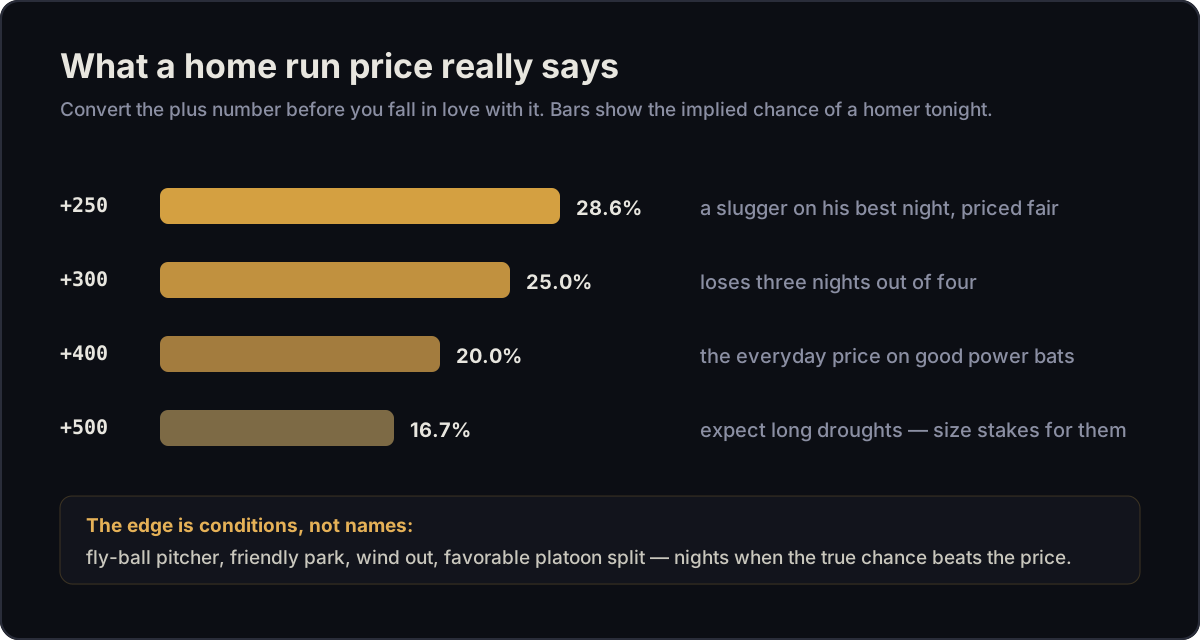
What actually moves that chance? Start with the pitcher. Fly-ball pitchers who live in the zone surrender homers; ground-ball specialists starve them. Platoon splits matter more here than in any other prop, because power is often lopsided by handedness. Then the park: the same fly ball is a homer in a bandbox and an out in a canyon, and summer air and wind blowing out add real percentage points. Lineup slot matters too, since hitting second instead of seventh is often an extra plate appearance, one more chance at the number.
Structure your stakes for the variance, because the variance is brutal. A 25 percent proposition loses three times out of four when priced fairly, and cold stretches of eight or ten games without a homer happen to great hitters every season. If you bet these at the same size as your -110 sides, the swings will wreck both your bankroll and your judgment. Half stakes or quarter stakes are normal here. Small edges, big season.
Resist the urge to parlay homer props. The prices are already juiced on the yes side, and stacking juiced longshots multiplies the book's margin, not your edge. One well-reasoned ticket a night beats a six-leg moonshot every time the season is long enough to matter.
And grade yourself in units over months, not weeks. This market pays in streaks: nothing, nothing, nothing, then a +380 that erases two weeks of losses in one swing. The only way to know whether you are actually good at it is a clean ledger. Track every homer prop on SharpAI for free and look at the net-units line after a hundred bets, not after Tuesday. The books price these last and worst; make sure your record proves you are on the right side of that sentence.